
Introduction: A Bitter Sweetness for the Festival Season
With September fast approaching, India is bracing for its annual festival season — a marathon of cultural celebrations traditionally fueled by the consumption of staggering quantities of sweets. Yet, this year, the sugar coating these festivities carries a sharp economic irony. For the first time in a decade, the world’s second-largest sugar producer is being forced to look beyond its own borders to keep its domestic jars full.
New Delhi just dropped import duties, ending a decade of self-sufficiency. It's a big move that shows how shaky things have gotten — energy targets, unpredictable weather, and worries about food security are all pulling in different directions. Now, a country that's usually flooding the world with sugar finds itself having to buy it back. The whole situation feels upside down.
The Decade-Long Streak is Officially Over
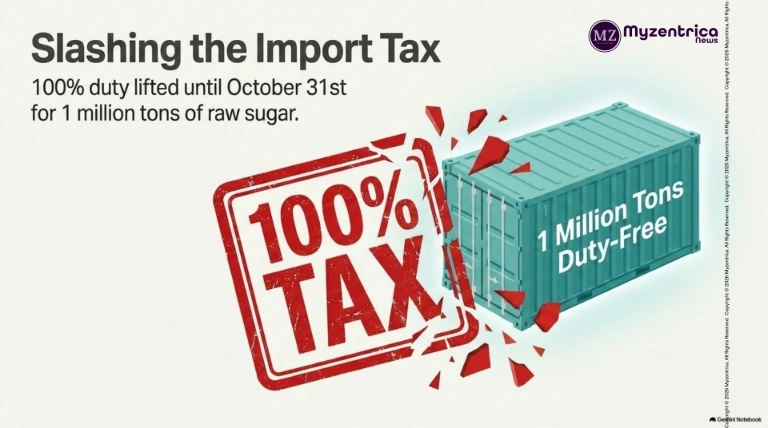
The Indian government has enacted a tactical retreat from its protectionist 100% tariff on raw sugar. Under this new directive, the government is waiving the duty on up to 1 million tons of raw sugar until October 31st. This is not a permanent policy shift, but a calculated emergency measure; once the quota is exhausted or the deadline passes, the 100% tax wall will be reinstated.
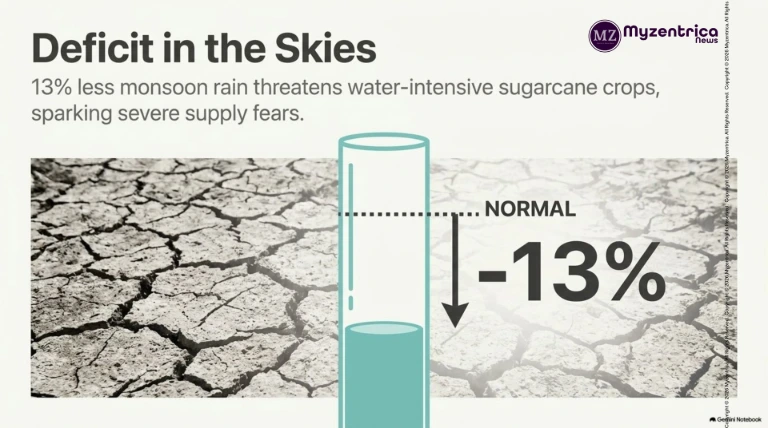 As an analyst, one must view this move as an admission of severe supply-side vulnerability. The primary driver of this anxiety is an "upstream" environmental failure: India has received 13% less monsoon rain this season. Given that sugarcane is among the most water-intensive crops on the planet, this rainfall deficit has triggered legitimate fears that domestic output will fall short of the national requirement. For a country that has spent a decade priding itself on sugar independence, this is a historical pivot driven by the sheer unpredictability of the climate.
The Unintended Consequences of Green Fuel (E20)
While the weather is a natural adversary, India’s own E20 fuel policy has become a man-made complication in the sugar supply chain. Launched to insulate the nation from global oil shocks, E20 petrol is a blend of 80% petrol and 20% ethanol. The "fuel vs. food" conflict here is direct: approximately one-third of India’s ethanol is derived from sugarcane.
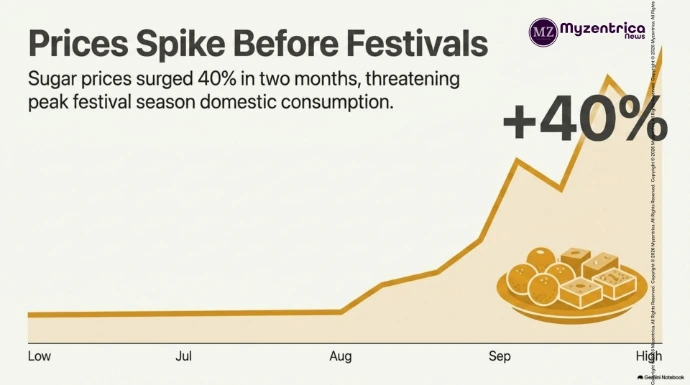 The more cane that is directed to the tank‚ the less there is for the table‚ and the result of this policy-induced shortage is that the price of domestic sugar has jumped 40% in two months․ The transition is far from smooth for the average citizen as the government pushes ahead with energy independence‚ the source context states․
"Most vehicles in India are not compliant with E20... a lot of them are complaining of mileage drops."
This illustrates the complexity of the current crisis: a government aggressively pursuing a greener future at the fuel pump, only to see the cost of that ambition reflected in a massive surge at the grocery store.
The 15-Day Rule: A Drastic Crackdown on Hoarding
Fearing a runaway price spiral during the peak demand of the festival season, the government has moved beyond trade policy into direct market micromanagement. They have implemented a strict inventory restriction—the "15-day rule"—which prohibits factories from holding sugar stocks that exceed 15 days of their requirements.
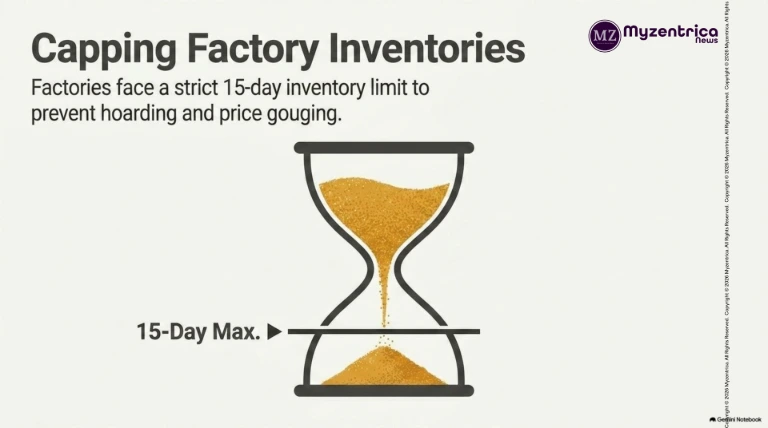 To put this in perspective, imagine a processing plant that utilizes 20 tons of sugar per month. Under these new restrictions, that facility is legally barred from holding more than 10 tons of inventory at any single moment. By forcing a rapid turnover of stock and preventing the accumulation of reserves, the government is signaling its desperation to keep every available gram of sugar moving through the economy. Such a heavy-handed restriction is a classic defensive move against the perceived threat of hoarding and artificial scarcity.
From Global Exporter to Vulnerable Importer
India went from a dominant exporter to a reluctant importer in no time: the difference between 2021 and today will eventually be a case study of how a commodity market can tighten․
2021: India was a sugar-producing giant‚ exporting around 12 million tons of sugar․
Current Status: India is importing 1 million tons of the wheat to avoid a domestic shortfall․
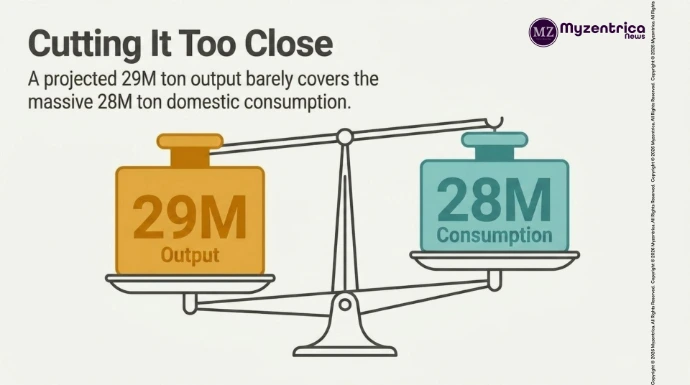 On a balance sheet, India appears safe: domestic consumption sits at roughly 28 million tons, while projected output (after ethanol diversion) is 29 million tons. However, for a population of 1.4 billion, this 1-million-ton "paper surplus" is considered cutting it too close. Any further weather-induced yield degradation could instantly flip that thin margin into a deficit, creating a supply cliff that the nation cannot afford to fall over.
The "Diabetes" Defense: A Stark Political Disconnect
As the market grapples with 40% price hikes and emergency imports, some political messaging has taken a turn toward the absurd. A minister of state from Bihar recently attempted to downplay the crisis with a controversial observation:
"Sugar prices and supplies are not an issue because diabetes is on the rise and so people are eating less sugar."
From a trade analyst's perspective, this rhetoric is fundamentally flawed. Sugar is an inelastic industrial input. Even if health-conscious tea drinkers reduce their intake, the massive industrial sweet and confectionery sectors—which are currently ramping up production for the festival season—cannot pivot their recipes or supply chains overnight. The minister’s comment fails to account for the reality that industrial demand, not just household spoons, dictates the equilibrium of the market.
Conclusion: Balancing the Tank and the Table
India is entering a critical juncture. October marks the start of the sugar season, and the objective is always to enter this period with "sugar in the bank"—strong opening inventories.While there are 8․5 million tons of the product expected to exist in October 2024‚ there will only be 3․5 to 4 million tons available in 2026‚ indicating an impending supply cliff․
The government may also take other steps and reports suggested the government may control the quantity of cane used for ethanol production to protect the food supply․This reflects the core tension facing the nation: the battle between weather-dependent agriculture, ambitious green energy targets, and basic food security. As India navigates this crisis, it must decide which is more vital: a cheaper gallon of fuel or an affordable bag of sugar. Can a nation truly achieve energy independence if the price of that independence is the affordability of its daily essentials?